
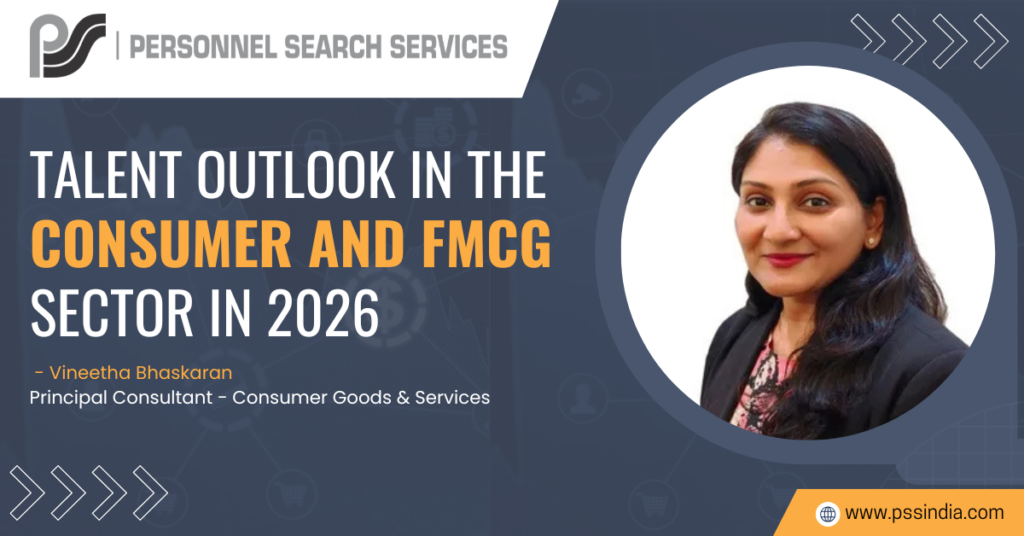
Vineetha Bhaskaran is a Principal Consultant – Consumer Goods & Services at Personnel Search Services. With over 15 years of experience in executive search, leadership hiring, and strategic talent acquisition across India and the Middle East. She specializes in identifying and placing senior leadership and CXO-level talent, partnering with organizations to build high-performing leadership teams that drive business growth and transformation.
Throughout her career, Vineetha has successfully led executive search mandates across diverse sectors, including FMCG, Consumer Durables, Automotive, Luxury Retail, Banking, Technology Startups, IT, and Media. Her deep industry knowledge, extensive professional network, and consultative approach have enabled her to deliver critical leadership talent solutions for both established enterprises and high-growth organizations.
1. Should Indian brands invest more in R&D or focus on marketing and influencer-led growth?
Over the last five years, India has witnessed an explosion of direct-to-consumer (D2C) and consumer brands. The rise of venture capital funding, social media platforms, and influencer ecosystems has dramatically lowered the barriers to building brand awareness and acquiring customers. As a result, many startups have prioritized marketing-led growth strategies to capture market share quickly.
One of the most prominent examples is Mamaearth, which emerged as one of India’s fastest-growing personal care brands by leveraging digital marketing, influencer partnerships, and purpose-driven branding. The company’s success demonstrated the power of social-first marketing in building awareness and scaling distribution. At the same time, Mamaearth also recognized the importance of investing in product development and research, balancing strong storytelling with continuous product innovation.
On the other hand, Asian Paints represents a different but equally compelling growth story. While widely recognized for its memorable advertising campaigns, the company’s long-term success has been built on decades of investment in research and development, technology, consumer insights, and supply-chain excellence. Behind the brand’s strong market presence lies a foundation of superior product innovation, color technology, and service differentiation.
These examples highlight an important reality for India’s evolving consumer landscape. Marketing may help brands gain visibility, but sustainable success requires a compelling product proposition supported by continuous innovation. As competition intensifies, consumers are becoming increasingly discerning, rewarding brands that deliver genuine value rather than relying solely on advertising.
The most successful Indian brands of the next decade are unlikely to be those with the largest influencer budgets or the most advanced R&D facilities alone. Instead, they will be the brands that successfully combine meaningful innovation with compelling storytelling, creating products that resonate with consumers while building lasting trust and loyalty.
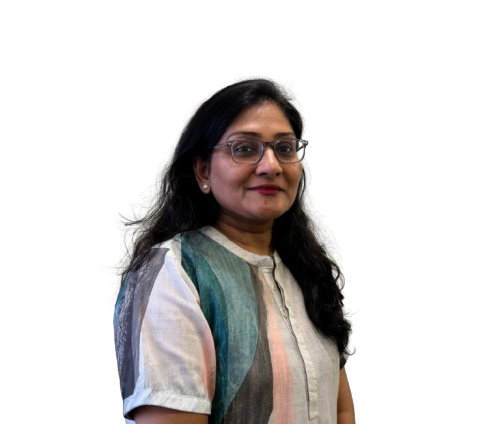
“The future belongs to brands that can identify emerging consumer trends early, innovate with purpose, and scale responsibly. Strong products may attract consumers, but trust and relevance are what build lasting brands.”
2. Would you trust a Gen Z leader to run a consumer-based company? Why or why not?
Gen Z leaders are fully capable of running consumer-focused companies, particularly in today’s rapidly evolving marketplace. In many cases, they may even hold an advantage over traditional leadership teams because they have a firsthand understanding of emerging consumer behaviors, digital trends, social commerce, and community-driven engagement. Their ability to connect with consumers in real time often enables them to identify opportunities and adapt more quickly than organizations that rely primarily on market research and historical data.
That said, successfully running a company extends far beyond building a strong brand. It requires expertise in long-term strategy, capital allocation, supply chain management, governance, risk management, crisis handling, and sustainable growth. While Gen Z leaders may excel at brand creation, innovation, and achieving product-market fit, scaling a business in a complex and competitive environment demands operational discipline, financial acumen, and leadership experience.
I would have complete confidence in a capable Gen Z leader leading a consumer company, especially in categories shaped by digital behavior, culture, and community. However, for long-term value creation and successful large-scale growth, the most effective model is often a combination of Gen Z vision and consumer insight, supported by an experienced leadership team that brings operational expertise and strategic guidance.
3. How should leaders prepare for shifts like digital commerce, changing consumer behaviour, and sustainability pressures?
I believe the biggest challenge for leaders today is managing continuous change. Consumer behavior, technology, and market expectations are evolving much faster than they did in the past, so leaders can no longer rely on traditional business cycles or long-term plans that remain unchanged for years.
To succeed, leaders need to view digital transformation as a business transformation rather than just a technology initiative. This means embracing data-driven decision-making, AI-led personalization, omnichannel consumer engagement, and faster innovation cycles.
Another important shift is the need for real-time consumer insights. Annual market research reports are no longer enough. Leaders need to stay closely connected to consumers through social listening, community engagement, and data analytics to understand changing preferences and respond quickly.
I also believe organizations need to become more agile. Faster decision-making, empowered teams, and stronger cross-functional collaboration are essential to adapting in a rapidly changing environment.
Finally, sustainability has become a strategic business priority. Consumers, investors, and regulators increasingly expect companies to operate responsibly, whether through ethical sourcing, sustainable packaging, or waste reduction initiatives. Leaders need to embed sustainability into their business strategy rather than view it purely as a compliance or CSR requirement.
Ultimately, the companies that will thrive over the next decade will be those that are willing to transform proactively rather than wait until disruption forces them to change.
4. Where do you see the biggest opportunities for FMCG startups in the next 5–10 years?
The next decade is likely to be one of the most exciting growth periods for FMCG startups in India. Rising disposable incomes, the rapid growth of digital commerce, increasing health awareness, and evolving consumer lifestyles are creating new opportunities across categories. The biggest winners will be startups that can identify emerging consumer needs early and respond with innovative products, strong brand positioning, and agile execution.
One of the most promising areas is health, wellness, and functional nutrition. Consumers today are paying closer attention to what they eat and are actively seeking products that support better health, whether it is gut-friendly foods, low-sugar alternatives, high-protein options, or products focused on preventive wellness.
Premiumization is another major trend shaping the market. India is no longer driven solely by value-conscious consumers. A growing segment is willing to spend more on products that offer superior quality, better ingredients, convenience, and a differentiated experience.
Regional brands also have a significant opportunity to scale nationally. With the rise of e-commerce and social commerce, brands can now reach consumers across the country without being entirely dependent on traditional distribution networks.
At the same time, rural and non-metro markets remain a huge untapped opportunity. The next wave of FMCG growth is likely to come from Tier 2 and Tier 3 cities, supported by digital distribution, increasing aspirations, and products tailored to local needs and preferences. Regional language communication and culturally relevant branding will play an important role in capturing these markets.
Overall, India is evolving from a mass-consumption economy into a more segmented and aspiration-driven consumer market. The startups that succeed will be those that spot emerging micro-trends early, build strong consumer trust, and solve specific consumer problems better than anyone else.
5. What are the future-ready needed by leadership professional to build, lead and grow successful consumer-focused companies in the next five years?
Over the next five years, the leadership playbook for consumer-focused companies is going to look very different from what it does today. While strong business fundamentals will always matter, leaders will also need to be digitally savvy, consumer-centric, adaptable, and comfortable operating in an environment of constant change.
Consumer behaviour is evolving faster than ever, influenced by social media, e-commerce, and changing generational preferences. Leaders who stay closely connected to consumers and understand how their needs and expectations are shifting will be better positioned to make the right business decisions.
Technology is also becoming central to every consumer business. Leaders don’t need to be technology experts, but they do need to understand how digital commerce, AI, automation, consumer analytics, and data-driven decision-making can create competitive advantage. The ability to use data effectively will be just as important as relying on experience and intuition.
Another critical leadership trait will be agility. Consumer trends can change overnight, and organisations need leaders who are comfortable experimenting, learning quickly, and adapting when required. The ability to pivot without losing focus will become increasingly important.
At the same time, innovation can no longer be limited to product development. Future-ready leaders must encourage innovation across the entire business—whether it’s customer experience, supply chain efficiency, digital engagement, or new business models. Creating a culture where innovation happens continuously will be essential.
Talent will be another major focus area. As workforce expectations evolve, attracting and retaining high-quality talent will require more than just competitive compensation. Leaders will need to build environments that promote learning, collaboration, accountability, and career growth.
There is also a growing recognition that growth alone is not enough. The startup ecosystem has shown that sustainable success comes from balancing growth ambitions with profitability and long-term value creation. Leaders will need to focus on building resilient businesses rather than pursuing growth at any cost.
Most importantly, the last few years have reminded us that disruption is no longer an exception—it is the norm. Whether it comes from technology, geopolitics, inflation, supply chain challenges, or changing consumer expectations, leaders must be prepared to navigate uncertainty. In many ways, adaptability is becoming one of the most important leadership qualities. The leaders who will succeed are those who continuously learn, evolve with the market, and remain deeply connected to both consumers and the realities of the business environment.
Visit our Insights page for the latest news and industry trends from the PSS and executive search world PSS Insights
Follow us on our LinkedIn Page for more updates:
#talentacquisition #executivesearch #talenttrends #recruitment #pssinsights #hrinsights