
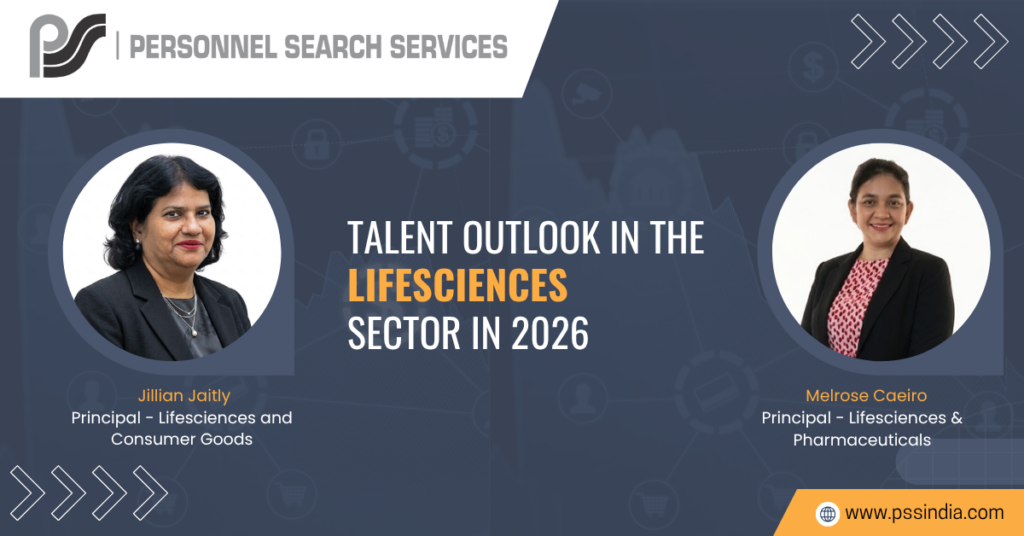
Jillian Jaitly leads Business Development for the Pharmaceutical & Life Sciences practice at Personnel Search Services, bringing nearly three decades of experience across the pharmaceutical, biotechnology, healthcare, life sciences, and consumer sectors. She partners with organizations on executive search and senior leadership hiring mandates while driving business development across industries including Agro Commodities, Food & Beverages, Packaging Solutions, and Shipping.
Melrose Caeiro, Principal Consultant – Pharmaceutical & Life Sciences, brings over 25 years of experience in executive search and leadership hiring. She specializes in recruiting senior and mid-level leaders across pharmaceutical, biotechnology, healthcare, and life sciences organizations, with a strong track record of delivering global CXO and critical leadership mandates.
Together, they combine deep industry expertise, extensive market insights, and a client-centric approach to help organizations identify transformational leadership talent and build high-performing teams that drive long-term growth and innovation.
1. Are Indian pharmaceutical companies looking to invest more in R&D to move up the value chain OR are the high capital costs and uncertainty of ROI going to continue to be impediments?
Indian pharmaceutical companies are increasingly investing in R&D, although the focus varies based on their strategic priorities and therapeutic areas. Broadly speaking, investment in novel drug discovery and new drug development remains limited and is concentrated among a relatively small number of companies.
A significant portion of R&D spending is directed toward moving up the value chain within the generics space. This includes the development of complex generics, differentiated dosage forms, vaccines, peptides, biosimilars, and other specialty products that offer stronger growth potential and better margins.
Many companies are also prioritizing the launch of first-to-market generics, as these products can generate attractive returns before competition intensifies. This strategy has become increasingly important as traditional generic products continue to face pricing pressures and margin erosion across key markets.
At the same time, the evolving geopolitical landscape has added another layer of complexity. Rising fuel prices, higher freight rates, and increasing logistics and carrying costs have pushed up overall input expenses. With global supply chains becoming more expensive and unpredictable, pharmaceutical companies are being forced to balance innovation investments with cost management and operational efficiency.
2. How can India reduce its dependence on imported medical devices? What are the biggest regulatory hurdles for startups developing innovative medical devices in India? Which medical device categories offer the greatest opportunities for Indian manufacturers over the next five years?
Yes, there is a strong need to further strengthen domestic manufacturing in the medical devices sector. The government should continue to promote Make in India initiatives specifically for medical device manufacturing by providing incentives such as tax benefits, subsidies, and easier access to funding for local manufacturers. Creating dedicated medical device parks and manufacturing zones with the right infrastructure can also help companies scale up and reduce dependence on imports.
One of the biggest challenges for start-ups in this sector continues to be the regulatory process. Many young companies struggle with the lengthy approval timelines and complex compliance requirements under the CDSCO. A more streamlined and predictable regulatory framework would go a long way in encouraging innovation and helping start-ups bring products to market faster.
Looking ahead, I see significant opportunities in categories such as portable and affordable imaging devices, including portable ultrasound machines, mobile X-ray systems, and other diagnostic solutions designed for both urban and rural healthcare settings. As healthcare access expands beyond major cities, the demand for cost-effective and easy-to-use diagnostic equipment is likely to increase substantially.
Another promising area is robotic surgery and advanced surgical technologies. As hospitals continue to invest in precision-based and minimally invasive procedures, the demand for devices that support robotic-assisted surgeries is expected to grow. Overall, companies that focus on innovation, affordability, and accessibility are likely to be best positioned to capitalize on the opportunities emerging in the medical devices sector over the next five years.
3. What skillsets and roles are in high demand across the life sciences space (pharmaceuticals, CDRAMs, medical devices, healthcare)?
Today, there is strong demand for talent across the entire pharmaceutical value chain. Professionals in Manufacturing, Quality, R&D, and other specialized technical functions continue to be highly sought after. As Indian pharmaceutical companies expand their global footprint and build capabilities across international markets, the need for skilled manpower in Manufacturing, Technology, Quality, and IT has grown significantly. At the same time, partnerships and collaborations are becoming increasingly important for driving innovation and growth. As a result, many organizations are actively pursuing strategic acquisitions or partnerships to gain access to specialized skills, technologies, and capabilities that can accelerate their business objectives.
Visit our Insights page for the latest news and industry trends from the PSS and executive search world PSS Insights
Follow us on our LinkedIn Page for more updates:
#talentacquisition #executivesearch #talenttrends #recruitment #pssinsights #hrinsights